
Competency Overview
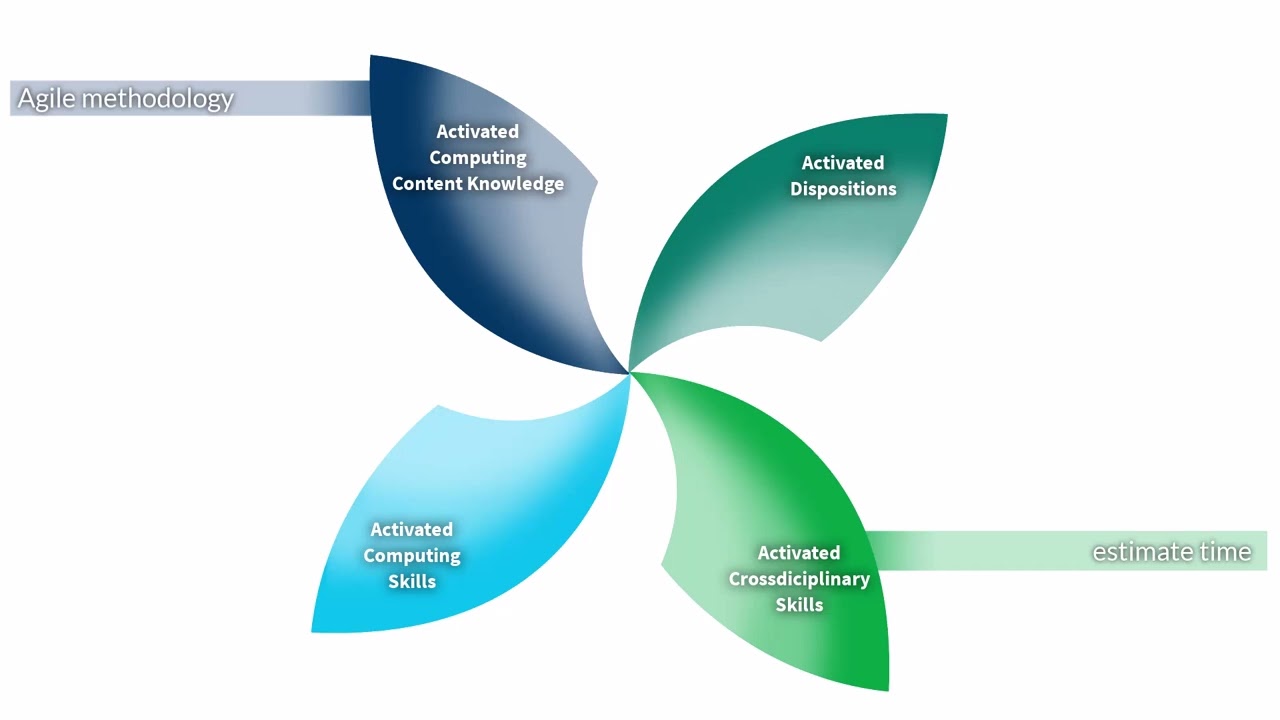
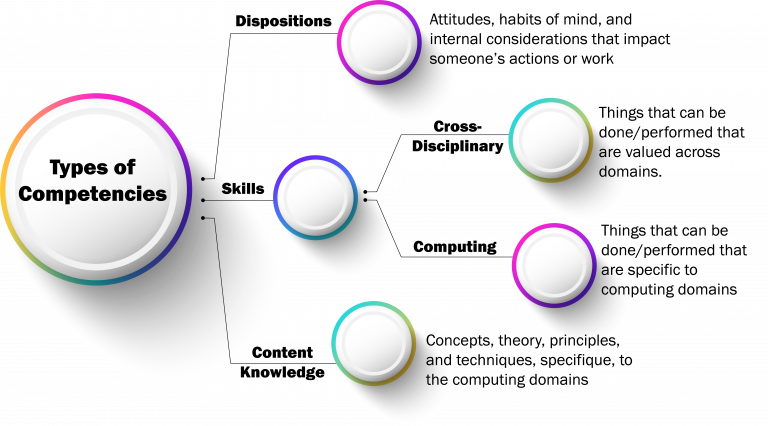
A competency is expertise individuals can demonstrate in professional, educational, social, or other life contexts. Competencies include content knowledge, skills, and dispositions.
What is Competency?
Why Competency-Based Education (CBE)?
Alignment with Real-World and Industry Needs:
CBE focuses on what learners can do in practice. Learning outcomes are tied to specific, observable skills used in professional roles.
Examples:
- Build and deploy a simple web application rather than only explaining how web frameworks work.
- Analyze a dataset and present findings using a dashboard tool.
- Write and test code that meets defined requirements, not just describe algorithms.
Adaptability in Rapidly Evolving Fields
Computing and engineering tools change frequently. CBE emphasizes transferable competencies that remain useful across tools and platforms.
Examples:
- Systems thinking that applies whether working with cloud, mobile, or embedded systems.
- Debugging a broken interface, regardless of hardware type or programming language.
- Version control practices using tools like Git, regardless of project type.
Development of Cross-Disciplinary Skills
Technical work requires coordination with others. CBE integrates these skills into coursework through applied tasks.
Examples:
- Working in teams to complete a project with defined roles (project lead, developer, tester).
- Presenting a technical solution to a non-technical audience.
- Writing clear documentation or user guides for a product.
Support for Lifelong Learning
CBE builds habits that support ongoing skill development after graduation:
Examples:
- Setting learning goals based on gaps identified during a project.
- Using documentation and online resources to learn a new tool independently.
- Reflecting on project outcomes and identifying what to improve in the next iteration.
- Digital Literacy and AI Literacy skills to promote appropriate use of relevant resources.
References
CC2020 Task Force. (2020). Computing curricula 2020: Paradigms for global computing education. Computing Curricula 2020. doi:10.1145/3467967
Raj, R. K., Impagliazzo, J., Aly, S. G., Bowers, D. S., Connamacher, H., Kurkovsky, S., MacKellar, B., Prickett, T., & Marques Samary, M. (2022). Toward competency-based professional accreditation in computing. Proceedings of the 2022 Working Group Reports on Innovation and Technology in Computer Science Education, 1–35. doi:10.1145/3571785.3574121
Raj, R. K., Impagliazzo, J., Aly, S. G., Bowers, D. S., Connamacher, H., Kurkovsky, S., MacKellar, B., Prickett, T., Samary, M. M., & Stefanov, K. (2022). Professional accreditation and competency-based computing education. ITiCSE 2022 – Proceedings of the 27th ACM Conference on Innovation and Technology in Computer Science Education, 2, 564–565. doi:10.1145/3502717.3532171
Prickett, T., Crick, T., Davenport, J. H., Bowers, D. S., Hayes, A., & Irons, A. (2024). Embedding technical, personal and professional competencies in computing degree programmes. Annual Conference on Innovation & Technology in Computer Science Education, 1, 346–352. doi:10.1145/3649217.3653578